
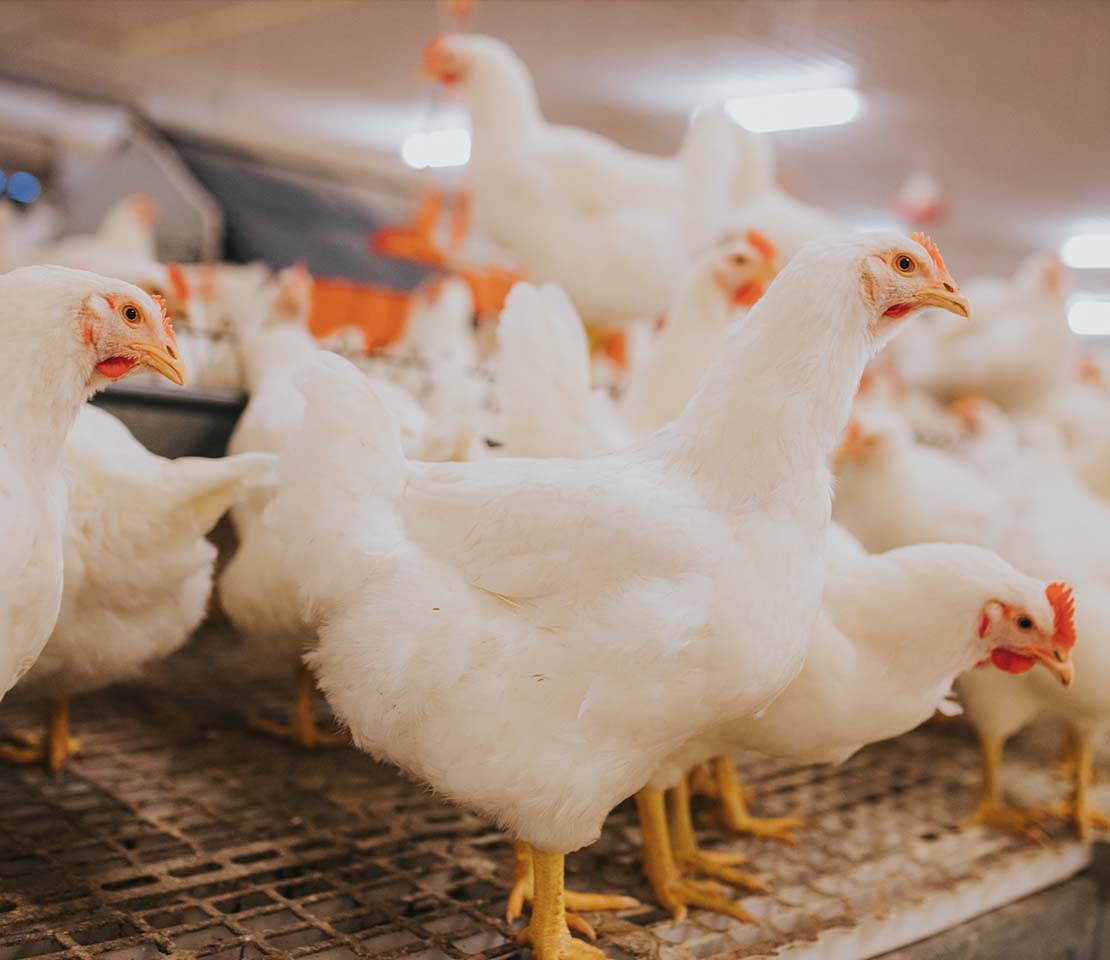
Objective and Challenge
Disinfecting sheds and equipment between flocks is critical to reduce the presence of viruses, bacteria and protozoa, which are all potentially pathogenic to incoming stock.
The previous flock will have been exposed to micro-organisms that may have caused disease in more mature birds, which chicks or young birds will not tolerate so well.
f there has been a disease such as coccidiosis or viral challenges, specific disinfectants can be applied to reduce the risk of recurrence.
In the case of notifiable diseases, special attention will be required for the muck out, cleaning and disinfection.
One organism which may not cause disease in birds but is concerning for human health is salmonella, if a flock is positive for Salmonella enteritidis or Salmonella typhimurium, stringent cleaning and disinfection will be required to prevent recurrence, non-reportable types of salmonella, known as exotic salmonella, may also be present, particularly in
broilers.
These exotic strains do not typically cause disease in birds or humans, but abattoirs prefer to slaughter these birds last to reduce cross-contamination. This might cause issues with the slaughter schedule.
It is not just the shed environment that should be tackled between flocks. There are potential pathogens in water lines, such as pseudomonas, which can accumulate in biofilm. If water lines are not cleaned properly during turnaround this can be a large risk factor for mortality in young chicks.
AquaSEEN™ Step-by-step guide to key target areas
AquaSEEN™ Step-by-step guide to key target areas
1. Walls, floors, panels
Blow down the walls and ceiling, Brush the floors and remove the muck. Next, spray the shed
with AquaSEEN, working from the ceiling down the walls to the floor – a spray lance which
reaches the ceiling should be used.
2. Feed equipment
Tip feeder pans with any leftover feed before raising the lines for muck-out. Ideally, remove
the remaining feed from feeder lines – however this can be difficult at broiler sites with a
short turnaround.
3. Drinking equipment
Drinkers must also be raised for muck out. Afterwards, prime the water lines with
disinfectant – ideally AquaSEEN one known to clear biofilm. This solution is often at a much
higher concentration than used throughout the flock.
4. Internal fittings
If possible, take removable equipment out of the shed to wash with AquaSEEN, or
wash in the shed. This prevents debris from the fittings contaminating a clean floor.
5. Ventilation
Blow down wash fans into the shed and then disinfect them with AquaSEEN; Fans can
collect dust which harbors pathogens such as salmonella.
6. Check the quality of the clean
This can be a visual inspection or swabbing of the shed to assess the clean. Some
accreditation schemes require monitoring of turnaround hygiene – take swabs for laboratory
analysis to assess what the microbial load is. If poorer results are obtained this can be
flagged for improvement for the next flock.
Hygiene audits during mucking out can also be performed by chemical companies, vets or a
pharmaceutical company.
AquaSEEN™ Housing and handling
Choose AquaSEEN™ disinfectant as an organic solution (based on USDA) which has a
quicker kill action to reduce the microbial load and, we don’t want to use a second
disinfectant with a residual action.